Home
Musketeers and Pirates in Action
- d´Artagnan at the Festival in Lupiac: www.ladepeche.fr
- The d´Artagnan Festival in Lupiac: www.dartagnanchezdartagnan.org
- Thomas d´Artagnan, emergency physician and Musketeer of the King: www.youtube.com
- A pirate in Corona quarantine (International Maritime Museum Hamburg): www.youtube.com
- 1000 km à cheval, d´Artagnan in Maastricht 2016, trailer at: www.youtube.com
- Festival d´Artagnan in Lupiac! Trailer at: www.youtube.com
- The riders of the Tour de France could hardly believe their eyes on 25 June 2014 in Belmont: they were escorted at full gallop by the three Musketeers! www.youtube.com
A Journey Through Time
Carried away from the present, soul and mind travel back to a bygone age. The longing for the good old days — or rather, for the good in the old days — leads us to early eras, where pride and honour counted among the virtues. And so we too are inspired by the knightly oath:
Be fearless in the face of your enemies. Be brave and upright, that God may love you. Always speak the truth, even should it cost your life. Protect the defenceless. This is your oath!
The Three Musketeers
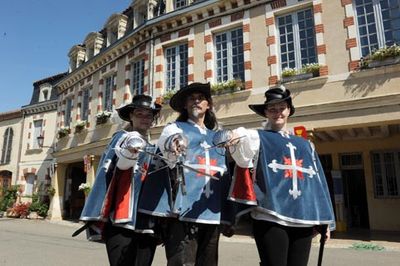
Loyal companions in the service of his Majesty. Brave and unwavering in the fight against injustice and crime. Full of joie de vivre and drive, masterful with the blade. While kings have long been forgotten, everyone still knows them: the Three Musketeers. Athos, Porthos, Aramis. And not to forget the fourth in their company: d´Artagnan. They fought equally well left- or right-handed, and took on three opponents at once without hesitation. And the secret of their strength was their motto — one our present age could badly use again:
Tous pour un et un pour tous!
All for one and one for all!
d´Artagnan
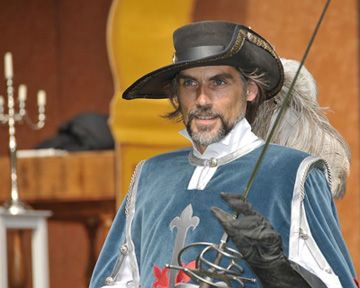
He really did exist, the Musketeer of his Majesty: d´Artagnan. He was born between 1611 and 1615 at Château Castelmore near the small town of Lupiac in Gascony, the son of the nobleman Bertrand de Batz-Castelmore and Françoise de Montesquiou, daughter of the Lord of Artagnan from Bigorre. He was one of the youngest of eight or nine siblings. In 1659, d´Artagnan — who, incidentally, signed the surviving marriage certificate as "dartaignan" — married the wealthy widow Charlotte-Anne de Chanlecy. Together they had two sons, given the thoroughly royalist names Louis Comte d´Artagnan (1660–1709) and Louis Chevalier d´Artagnan (1661–1714). The marriage was already dissolved by 1665. A descendant of the second-born son, Louis Gabriel, Marquis de Castelmore d´Artagnan (1710–1783), was born later, but the family line ended with him.
Whether d´Artagnan's father had already served the King is questionable, but several of his brothers served as Musketeers, and so d´Artagnan too harboured the fervent wish to become a Musketeer of his Majesty.
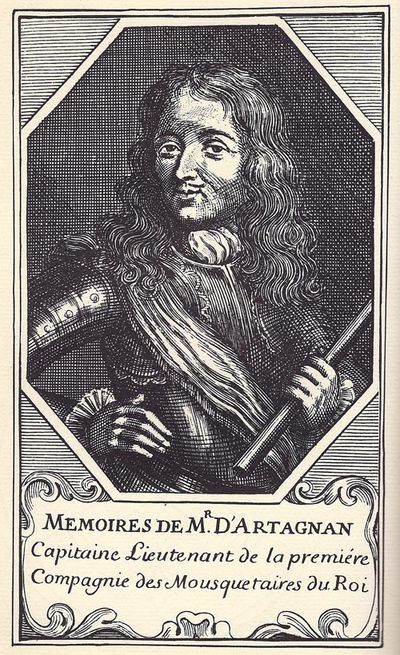
The path there was nonetheless arduous: when he moved to Paris under his mother's name, d´Artagnan, he had no military career to speak of. It was not until 1644, after serving in the Compagnie des Essarts of the Gardes Françaises, that he was admitted into the King's royal Musketeer guard. He proved his extraordinary loyalty and sense of duty in numerous missions. He had already guarded the young King Louis XIV during the Fronde uprising, and on 5 September 1661 he arrested the corrupt finance minister Fouquet, subsequently escorting him as a prisoner to various locations. He was also responsible for escorting the Duke of Lauzun in 1671, and was said to have treated his prisoners with exceptional tact.
Only in 1667 was d´Artagnan promoted to Captain-Lieutenant of the King's first company of Musketeers, making him commander of the Musketeers and the King's personal bodyguard. Louis XIV, owing to d´Artagnan's extraordinary sense of duty and reliability, always held him in the greatest trust, and after the death of d´Artagnan's eldest brother even raised him to the rank of count as "Comte d´Artagnan." The high point of his career was his appointment as Governor of Lille in 1672, standing in for Marshal d´Humières, who had to take the field on campaign. However, conflicts arose between d´Artagnan and some of Vauban's engineering officers, who were tasked with turning Lille into a fortress, so that upon d´Humières' return in the winter of 1672, the Captain of the Musketeers preferred to take the field once more himself.
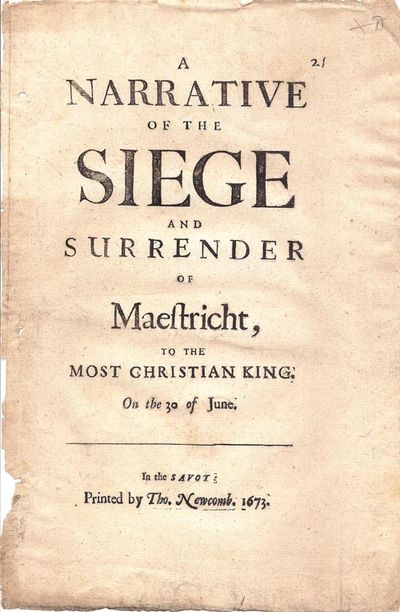
In the Franco-Dutch War, he took part in the siege of Maastricht in 1673, with the King himself in supreme command. D´Artagnan's Musketeers, together with their allies, captured an advanced bastion (a "lunette") in front of the Tongres Gate of the fortress. After the Dutch recaptured it, d´Artagnan was persuaded by the Duke of Monmouth to mount a counter-attack. On the night of Saturday the 24th into Sunday the 25th of June, the position was captured a second time. But d´Artagnan, the Captain of the Musketeers and personal bodyguard of Louis XIV, lost his life in the attempt. He was standing beside the Duke of Monmouth when a shot struck him in the kidneys. His death was deeply mourned, not only by his Musketeers but above all by the man he had faithfully protected since childhood: King Louis XIV — who, it is said, wept for him.

Alexandre Dumas's Novel
Twenty-seven years after d´Artagnan's death, Gatien de Courtilz de Sandras (born 1644 in Montargis, died 8 May 1712 in Paris) wrote the three-volume biography "Mémoires de Monsieur d´Artagnan," published in 1700 in Cologne. The author had himself been a Musketeer, moved to the Netherlands in 1688 after ending his military career, and devoted himself to writing — which landed him in prison more than once, even in the Bastille. There he gathered a wealth of information about d´Artagnan, since the commandant of the Bastille at the time was Besmaux, a former companion of the famous Musketeer.
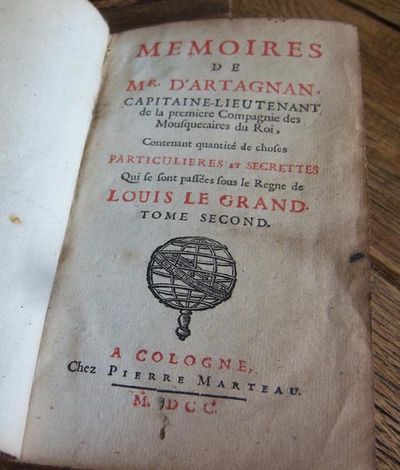
The memoirs of Monsieur d´Artagnan went through several further editions and eventually inspired the writer Alexandre Dumas (born 24 July 1802 in Villers-Cotterêts, died 5 December 1870 in Puys) to turn them into a newspaper serial. It was published in 1843/44 in the paper "Le Siècle." Its success was immense — "Les trois Mousquetaires" was born. It should be noted that the three Musketeers referred to were Athos, Porthos, and Aramis. These Musketeers, too, really existed, though at different times and not as a sworn brotherhood — that idea was born in Dumas's imagination, just as he turned the real-life Musketeer captain of the time, "Troisville," into "Treville."

The stories were so successful that Dumas continued his Musketeer tales in 1845 with "Vingt ans après" (Twenty Years After) and in 1847 with "Le Vicomte de Bragelonne ou Dix Ans Plus Tard" (The Vicomte of Bragelonne, or Ten Years Later).
Why Dumas moved his novels — which otherwise closely match the events of the period — twenty years earlier than they actually took place is not known. The real d´Artagnan served Louis XIV, not Louis XIII. His adversary was Cardinal Mazarin, not Richelieu.
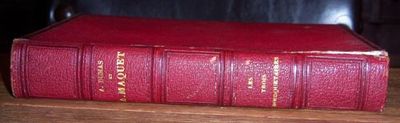
Something little known today: some of Dumas's most famous novels (The Three Musketeers and its sequels, The Count of Monte Cristo, and others) did not entirely come from his own pen! Dumas had in fact hired a co-author: the writer and history professor Auguste Maquet (born 13 September 1813 in Paris, died 8 January 1888 in Paris). His name, however, was never credited, and his collaboration with Dumas ended in the 1850s. Dumas reaped all the fame alone.
The Message
Armed conflict has always been a scourge of humanity, and as military leader of the Musketeers, the real d´Artagnan was of course also significantly involved in such events. But Dumas's great achievement was to give us a Captain of the Musketeers of tremendous symbolic power: d´Artagnan is a hero of France, and at the same time a role model for the whole world. May the values that define his character — charm, reliability, courage, camaraderie, and loyalty — find their way back into the hearts of men everywhere!
Le Musée d´Artagnan, Lupiac
Anyone wishing to experience the flair of the hot-blooded Gascon should pay a visit to his homeland. A charming landscape, sunflower fields as far as the eye can see. At its heart lies the small town of Lupiac, in what is now the Gers department. It remains today almost unchanged in the style of the 17th century: a sandy market square with a fountain, surrounded by low houses from d´Artagnan's era, a town hall, a church, a small shop. About four kilometres away stands Château Castelmore — sadly not open to the public today, but privately owned by the mayor. It is said to be d´Artagnan's birthplace. In his memory, the Chapelle Notre Dame in Lupiac houses a small but delightful museum, where the story of d´Artagnan and the Musketeers comes alive again: books, documents, a musket and musket balls, swords, bronze figures, film posters — along with a wonderful documentary screened in a small cinema room.
The Festival
It was in the early morning hours of Easter Saturday, 23 April 2011, when I stepped down from the carriage with my Musketeers and set foot for the first time on the sandy ground of Lupiac's main square. A feeling of "home" crept over me, and my first thought was: this would be the perfect backdrop for a historical d´Artagnan festival.
In a linen shirt and boots, I set off in search of breakfast. When a woman from Lupiac came towards me, her astonished words were: "d´Artagnan?!" At that moment, I truly felt at home.
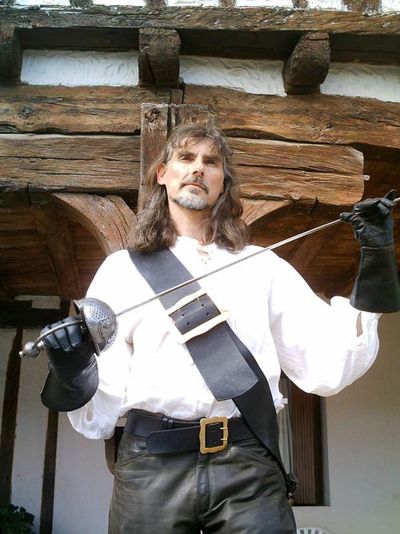
My idea for a d´Artagnan festival was met with enthusiasm at the museum, especially with the 400th anniversary of his birth approaching. Yet I was given little hope, since the mayor was said to always reject such ideas. He lived at Château Castelmore, never answered enquiries, and let no one into the château. But we would hardly be Musketeers if we had surrendered at that. Onward to Castelmore! Storming the château, we found a thoroughly astonished mayor, staring in disbelief at the Musketeers who had entered his château uninvited. D´Artagnan was back. Suddenly, nothing stood in the way of a tour of the château. We were especially delighted by the wonderfully preserved original kitchen with its great fireplace. On a long knight's table lay two crossed swords. I drew my own sword and laid it beside them, saying: "Les trois Mousquetaires!" The mayor was moved, and thanked us with a bottle of Armagnac and a "one million" Reichsmark inflation-era banknote.
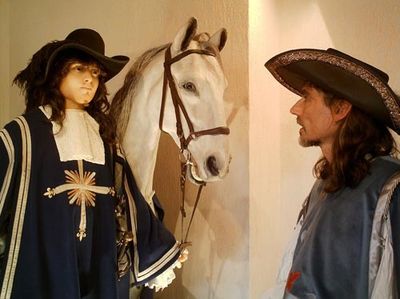
By the time we returned to Hamburg, a joyful message awaited us in the post: the Musée d´Artagnan, itself taken by surprise, wrote to say that d´Artagnan's 400th birthday was indeed to be celebrated, and asked whether I, as d´Artagnan, together with my Musketeers and horses, would help shape the festival.
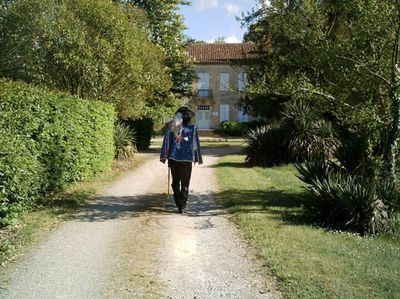
What happened next was extraordinary. A committee of more than forty people came together under the leadership of the deputy mayor, Véronique Thieux-Louit, and the foremost d´Artagnan expert, Régis Meyer, to prepare the festival. Lupiac was repainted, façades restored, stalls built. A tailor's workshop was set up, and historically authentic costumes were sewn for all 312 residents. Pennants, flags, and coats of arms were made. Lupiac awoke from its slumber and was transported, without compromise, back into the 17th century. And it would prove worth it.
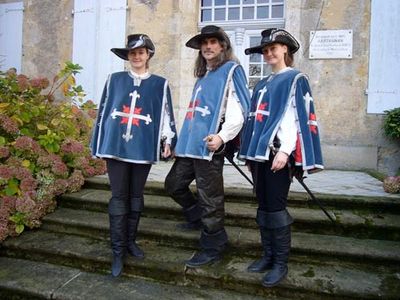
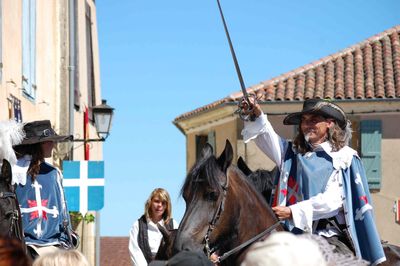
On 12 August 2012, several thousand visitors came to Lupiac to experience a sensational journey through time. For the opening, eight of us Musketeers on horseback escorted a group of hikers on a historic walk from Lupiac to Château Castelmore. The service in the historic church lent just as much historical atmosphere as the fine market showcasing the traditions of Gascony. A troupe of Musketeers from Paris performed throughout the town — even Richelieu and Lady de Winter made an appearance. The constant clash of blades was, of course, the main attraction for visitors and residents alike.
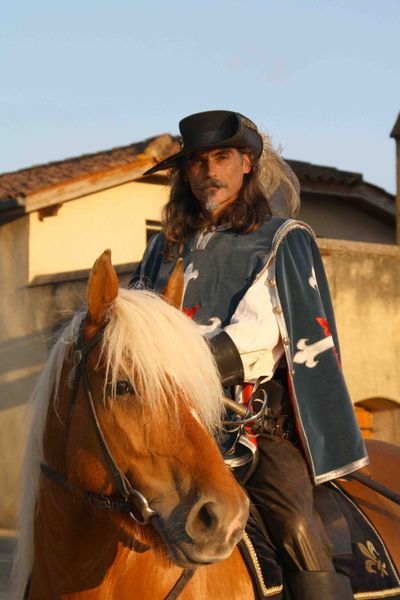
My personal highlight was presenting the original three-volume edition of the "Mémoires de Mr. D´Artagnan" from 1700, which I donated to the Musée, since until then it had only held a reprint. All the Musketeers present, and even the Cardinal's Guard, formed an honour guard with drawn swords as I rode onto the square with my Musketeers. Dismounting, I marched with firm steps through their ranks while the local orchestra played the March of the Musketeers. With plumed hat raised, I knelt before the majestic couple — my king, the mayor, and my queen, Véronique — and presented the treasure amid the cheers of the crowd. The 12th of August 2012 was a special, unforgettable day — a day in the 17th century.
The success of the festival had wider repercussions. Politicians came together to discuss how d´Artagnan could help promote the region, both for tourism and economically. The festival was declared an institution, and the association "d´Artagnan chez d´Artagnan" was founded, which now organises the event every year. Hamburg and Lupiac are separated by some 1,800 km — but d´Artagnan's long journey had been worth it.
À Lupiac!